Introduction
In the wake of the COVID-19 pandemic, a number of new school models and curricula became popular with parents (McShane 2024). Among education observers, “classical education” in particular has been seen to be an increasingly popular school model. A writer for the popular education site The74 asked, “Amid the Pandemic, a Classical Education Boom: What if the Next Big School Trend Is 2,500 Years Old?” (Mahnken 2023). The introductory section of this paper begins by identifying what the modern classical education movement in the United States is, and how proponents see themselves as being part of a “renewal” of older forms of education. In the following section it attempts to quantify the growth in the U.S. movement through its substantial increase in revenues over time. It will then describe the literature exploring why parents may choose this form of education—their rationales for making school choices in general, and the choice of classical education specifically. The majority of the paper concerns the results of a survey asking current participants in classical schools about their own definitions of the term “classical education” and what they expect their students to gain from such an education.
Based on the results of this survey, I argue that classical schools should consider reflecting on and more clearly defining what they mean by “virtue” in the contexts of their schools, and that classical families and educators may actually be more interested in modern educational outcomes than one might expect. I hypothesized that outcomes and definitions of classical education focused on virtue and tradition would be significantly more popular among respondents than modern concepts like academic achievement and prestigious college enrollment. Promotion of virtue was in fact reported as the most important outcome of a classical education, and virtue-based definitions of “classical education” were the most popular. Contrary to what one might expect from a group of current classical parents and educators, however, academic achievement and basic skills were rated as more popular than some of the virtue-based attributes of classical schools, and definitions with modern connotations were more popular than some focused on tradition. Finally, I offer avenues for further research in this area, including more explorations of how classical families and schools define “virtue,” as well as how these schools are manifesting in various ways as the sector grows—as private, religious schools, and secular public schools, and in international versions.
The Modern Classical Education Movement: Renewal
Growth of the “classical education movement,” or, sometimes, the classical education “renewal” (Ellis 2023), has been underway for several decades (Meadowcroft 2023). In recent years, the movement has reached a certain critical mass in the U.S. (Mahnken 2023), sparking both hope (Hess 2024) and consternation (Green 2024) among observers of American education policy.
Many observers have difficulty describing what exactly “classical education” means (Phillips 2024). Williams (2022, 13) offers a definition with which most proponents of modern classical education would likely agree: “Contemporary classical education is an attempt to recover and continue the long liberal arts tradition that began with the Greeks, Romans, and early Christians, but which was overwhelmed by dominant twentieth century paradigms.”
In somewhat more practical terms, Lindquist (2019) defines “classical education in modern America” as having four basic components:
-
“Classical education tends to emphasize rich, canonical works that have stood the test of time” (164–165);
-
“These works are usually part of a core curriculum, which all students must engage with to matriculate to the next level” (165);
-
“[S]tudents and teachers are open to mystery and transcendence. Students at classical schools tend to be familiar with words like ‘goodness,’ ‘beauty,’ ‘truth,’ ‘justice,’ ‘virtue’” (165);
-
“[C]lassical schools tend to emphasize a coherent school culture as vitally important to the life of the students. Rather than encouraging teachers to develop their own practices and procedures within their classrooms, classical schools tend to encourage faculty to coach and mentor students in the same habits and dispositions throughout the school day. The school is therefore not a series of ‘island’ classrooms but rather a unified whole” (165–166).
Quantifying the Movement: Revenues
Economic Growth of Classical Education
This type of school has seen massive growth in the U.S. since the early 1990s, including not just classical schools, but also classically-minded homeschoolers, and support groups/networks and publications. According to Meadowcroft (2023, 30–31),
These institutions are growing, both in size and in number. The Association of Classical Christian Schools (ACCS), founded in 1993, now boasts more than 450 member schools. Other representatives of this movement include the Society for Classical Learning, the Institute for Catholic Liberal Education, the American Classical League, the Center for Independent Research on Classical Education (or CiRCE Institute), and the Classic Learning Test, along with a host of publishers and other organizations dedicated to the support of private classical religious schools.
The classical model has become a significant part of home schooling and charter schools, too. Great Hearts Academies, whose blueprint school was established in 1996, has more than 30 campuses throughout Arizona and Texas. Since its founding in 2010, Hillsdale College’s charter-school initiative has assisted communities across the country in establishing more than 20 member schools, with dozens more being approved to use its curriculum. And Classical Conversations, a home-schooling tutorial company launched in 1997, says it serves more than 125,000 students.
Ellis (2023) argues that classical education now boasts “a fully articulated eco-system encompassing private and public K–12, a college admissions exam, undergraduate majors and minors, and now, not a few graduate programs” (41). As a result of the growth in this ecosystem, the classical education sector has specifically seen significant economic growth over the past several years. According to ProPublica, several organizations dedicated to the promotion of classical education have seen their revenues grow substantially in the last decade. For example, the following organizations’ revenues grew between 2011 and 2022: the Society for Classical Learning (SCL) grew from $77,800 to $1.29 million; the Association for Classical Christian Schools (ACCS) grew from $301,000 to $1.76 million; the CiRCE Institute grew from $298,000 to $2.08 million (2023); and the Institute for Catholic Liberal education grew from $15,900 in 2011 to $2.33 million.
This is also true for some of the better-known individual classical schools and school networks: Veritas Classical Christian School in Richmond, Virginia grew its revenue from $2.18 million to $14.6 million in 2023; the Regina Caeli Academies grew from $214,000 to $5.37 million; and Great Hearts America grew from $625,000 in 2014 to $10.1 million. These results do not include more decentralized networks like the Chesterton Academies or Classical Conversations, which have also seen growth over recent years (Chesterton Academy 2021). They also do not include private publishing entities such as Classical Academic Press, Memoria Press, Kolbe Academy, Roman Roads Media, or the many others which provide materials for classical schools and homeschoolers.
Understanding the Movement: Prior Academic Research
Prior Academic Research on Classical Schools
Some academic research has been conducted on classical schools, but to date it has not been empirical (Buck 2024). Rather, most research on classical education in the social sciences has been more philosophical or historical than experimental (see, for example, Ellis 2023; Fennell and Simpson 2023; and Schultz 2016).
Some empirical work, however, has been conducted. The Good Soil report, published by ACCS, is the result of a long-term survey and found that students in classical schools had better college preparation than students in comparable schools (Goodwin and Sikkink 2020). Classical students also had better social and religious outcomes, measured as graduates adhering to the values the schools sought to instill in them over time. Other work has experimentally explored aspects and effects of classical curriculum (Cheng 2023; Cheng and Djita 2022).
Being ACCS members, all of the schools in the Good Soil report were religious (Christian) schools as were the subjects studied by Cheng (2023) and Cheng and Djita (2022). And classical schools have tended to be not only “classical schools,” but “classical Christian schools.” More recent work has explored the relatively newer phenomenon of classical charter schools, which are by their nature secular. Cheng and Syftestad (2023), for example, find increasing demand for charter classical schools in Texas. Great Hearts Academies, noted above, are also examples of the growth in secular classical schools.
Prior Academic Research on Parental Choice
More work has been done to examine school choice generally. As opposed to a centralized public school system, Strong (2020) argues that a market-based system is better able to serve families with diverse wants and needs. Magness and Surprenant (2019, 93) agree, writing, “Parents from diverse backgrounds may have very different ideas about what constitutes a good education for their children. Without passing judgment on these views, the market is able to offer a variety of educational options….” This difference of opinion on what constitutes a “good education” is certainly true of parents choosing a classical education for their children rather than a conventional public school education; classical and conventional education have different aims. Glenn (2018) similarly argues for “education pluralism” and against “hegemony.” Glenn adds that historical and international experience suggest that such pluralism, rather than “dividing” society, actually leads to “considerably less conflict over schooling than occurs in the United States” (Glenn 2018, 135).
Regarding reasons parents say they choose particular schools, prior work has found a variety of reasons, such as location, safety, teacher quality, or curriculum (Holmes Erickson 2017). Test scores or other conventional academic outcomes are reported to be preferred less often (Corcoran and Jennings 2020; Kelly and Scafidi 2013). While many families prefer the school closest to their home (Harris and Larsen 2015, 3), many others are willing to travel for particular schools that they prefer (Wilson et al. 2010, 2177), though different groups experience different levels of access (Altenhofen, Berends, and White 2016, 11; Teske, Fitzpatrick, and O’Brien 2009, 28).
Data and Methods
Contributing to the previous research just outlined, this article is the result of an online survey sent to leaders of classical schools in order to learn about how current classical school leaders and parents define “classical education,” and what kinds of outcomes they are seeking for their students from such an education. This survey contributes to the paper’s focus on renewal and rationales for classical education. Schools were identified in multiple ways:
-
From the posted membership lists of a number of classical education organizations (Great Hearts Academies, Founders Classical, Ascent Classical Academies, ACCS, Hillsdale Initiative, the National Association of University-Model Schools Classical list, the Institute for Catholic Liberal Education, the Thales Academy network, the Veritas Academy network, the Classical Latin Schools Association, and the Chesterton Academies);
-
From the internal database constructed by the National Hybrid Schools Project at Kennesaw State University, which studies hybrid and microschools, many of which are classical;
-
From the CiRCE Institute’s online job board.
Group 1 captured the largest number of schools. Groups 2 and 3 picked up more classical schools which operate as single-unit, independent entities, rather than as members of larger networks. The list of schools this generated is by no means an exhaustive list of every classical school in the country, but it likely captured a large proportion of such schools.
The search for classical schools resulted in a list of 690 classical schools. Each school leader was sent an online survey consisting of 22 total questions, which included a set of 10 directory-style questions, and then a series of 12 combinations of items. In this second set of questions respondents were presented with four sets of three items randomly selected by Qualtrics survey software, and asked to select their preferences, choosing both the most accurate/important and least accurate/important in each set.
These results were then analyzed using a MaxDiff analysis. MaxDiff analysis is a stated preference method which “requires respondents to make trade-offs between attributes and is cognitively less taxing than the direct methods measurement of utility preference, due to the lack of need to rank or allocate points to a lengthy list of items” (Tran et al. 2023, 195). In this study the method was used to elicit school leaders’ and parents’ judgments about: 1.) a variety of possible definitions of classical education; 2.) the relative importance of a variety of possible academic outcomes of classical education; and 3.) the relative importance of a variety of possible general life outcomes of classical education. This design asks respondents to make choices among the options presented and to accept tradeoffs by ranking their choices. In addition to stated preferences, the results of this method describe the relative importance of outcomes against each other.
The particular sets of choice prompts were arranged as follows:
Choice Set 1: Definitions of “Classical Education”
The first set of prompts asked respondents to choose the most and least accurate definitions of “classical education.” Before the sets of choices, respondents were presented with this prompt:
We are interested in understanding how people define “classical education” in terms of its nature and purpose. On the next few pages, you will be presented with four sets of three definitions/descriptions of “classical education.” Please select the item your school considers the Most Accurate and the Least Accurate as a definition of “classical education” within each set.
Definitions were drawn from organizations and authors who support classical education, as well as from classical schools’ and networks’ mission statements. In order to include the many purposes of classical education suggested by the media and literature, six of the 12 definitions offered focused on tradition and virtue, and the other six focused on more modern aspects of education such as academic success, vocation, and personal fulfillment.
Choice Set 2: Academic Outcomes
In the second section, respondents were presented with this prompt regarding which academic outcomes they preferred:
We are interested in understanding what people value as the outcomes of a classical education. On the next few pages, you will be presented with four sets of three types of general outcomes of classical education. Please select the item your school considers the Most Important and the Least Important as an outcome of classical education.
Similar to the definitions section, the 12 academic outcome options also fell into one of two categories or academic styles: those suggested by classical education sources, and those suggested by modern education sources (though all are possible outcomes that were valued in some way by classical schools).
Choice Set 3: General Life Outcomes
Finally, the third set of questions prompted respondents to choose among various general life outcomes:
We are interested in understanding what people value in terms of general life outcomes for classically-educated students. On the next few pages, you will be presented with four sets of three general life outcomes. (If your school does not continue through high school, assume these questions are asking about classical schools like yours which do go through 12th grade). Please select the item you consider the Most Important and the Least Important to you within each set.
These choices were based on similar questions used in other work (Lee, Johnson, and Cheng 2024; Lee, Thompson, and Wearne 2024).
The survey software (Qualtrics) was used to generate a random presentation of the 12 items in each choice set for respondents. Respondents were randomly presented with four separate sets of three items at a time for each choice set (Definitions, Academic Outcomes, and Life Outcomes). In each set of three items, respondents were asked to identify the most and least accurate (if a definition) descriptions of their schools, or most and least important (if academic or life outcomes).
At the close of the survey window, an aggregate score was calculated for each response item, using a straightforward MaxDiff counting analysis, thus:
[(number of times rated most important – number of times rated least important) / number of times an item appeared] / x 100
Therefore, a positive aggregate score indicates that an item was selected as most important more often than not (+100 was the highest possible score). The higher the score, the more often it was selected as most important. A negative aggregate score indicates the opposite: the item was selected as least important more often than not (-100 was the lowest possible score). A score close to zero indicates that the item was generally either not considered most or least important compared to most other items, or was selected as most and least important a similar number of times. So, for example, an item that was rated “most important” 10 times, “least important” five times, and appeared a total of 20 times would receive an aggregate score of +25:
[(10−5)/20]×100=25
It is important to remember that these items were all judged in relation to one another. Respondents might have preferred (or rejected) everything on the list, if allowed to select every definition or every academic/life outcome provided. The value in this MaxDiff analysis is in supplying respondents with random groupings of the items, and then forcing respondents to rank choices against each other, thus providing some sense of their stated preferences in each survey area, as well as how they consider tradeoffs in these three areas.
Research Questions
This article, then, seeks to address three specific research questions:
-
How do respondents define “classical education”?
-
What do respondents value most in terms of academic outcomes?
-
What do respondents value most in terms of other life outcomes?
Based on the reputation of classical schools as existing to promote virtue, and based on the fact that most of these schools are also Christian in some form, I hypothesized that families would prefer the values/tradition-based definitions and religious-related outcomes as rationales for choosing classical education over modern or utilitarian options.
Results
Overall, 130 respondents from 22 different states replied to this survey (with each respondent providing four sets of answer choices to each question area). Respondents reported that their schools belonged to one or more of the following organizations/networks:
-
ACCS
-
Chesterton Academies
-
Classical Latin Schools Association
-
Hillsdale
-
Regina Caeli Academies
-
Thales Academies
-
Veritas Classical Schools
-
None
Approximately 70 percent of respondents identified themselves as parents/current family members of students at a classical school; the other 30 percent identified themselves as classical school administrators.
Just under 63 percent of schools described their school as “Protestant,” “Evangelical,” or “broadly Christian.” 27 percent of respondents indicated their school was Catholic. The remaining approximately 11 percent of schools (including all of the charter schools) either responded “NA,” “other,” or left this question blank. Slightly less than 4 percent of the schools in this survey were charter schools (and thus are secular schools by nature).
Definitions
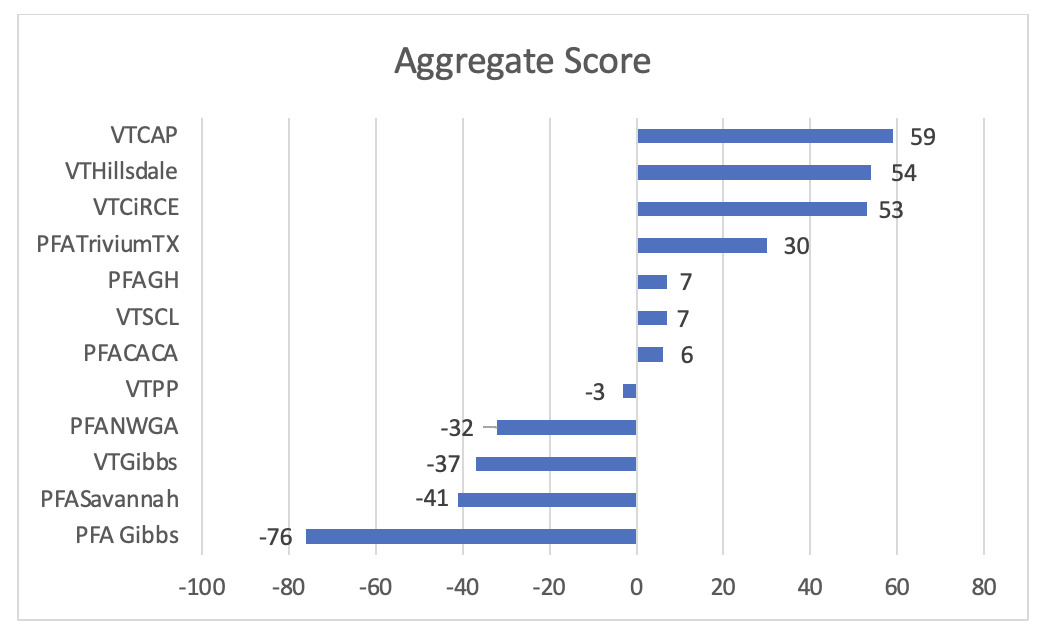
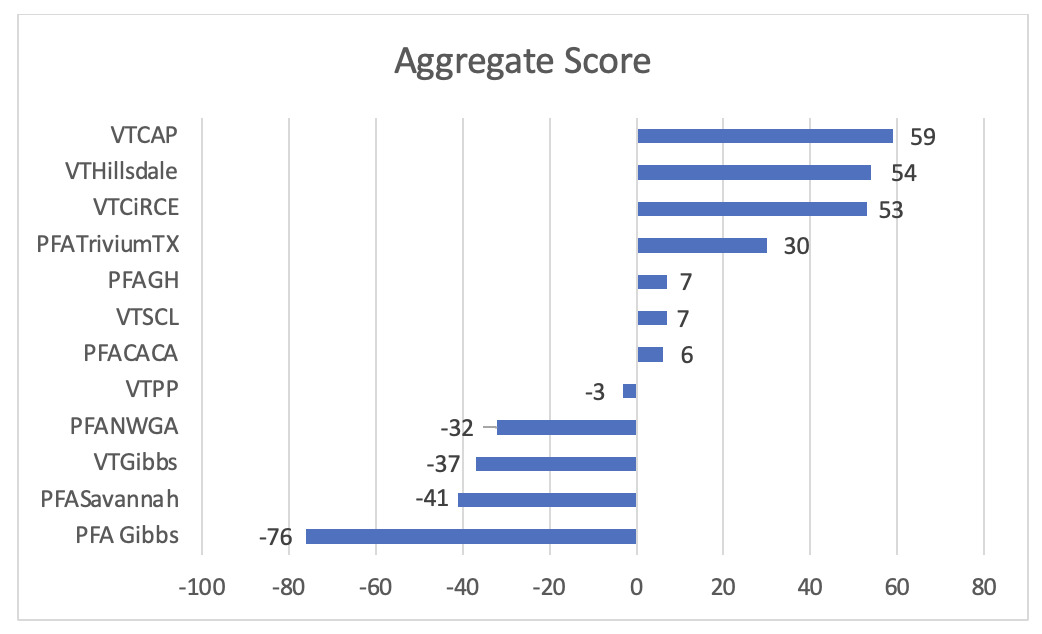
Most respondents did prefer values-based definitions; those offered by Classical Academic Press, Hillsdale, and the CiRCE Institute were by far the highest-ranked choices. Interestingly, the definition offered by Trivium, which is a charter school and whose definition is more focused on practical skills for the modern world, was the clear fourth-most preferred option. The least popular option was a statement offered by an author (Gibbs 2022) providing an intentionally poor definition of classical education.
Academic Outcomes
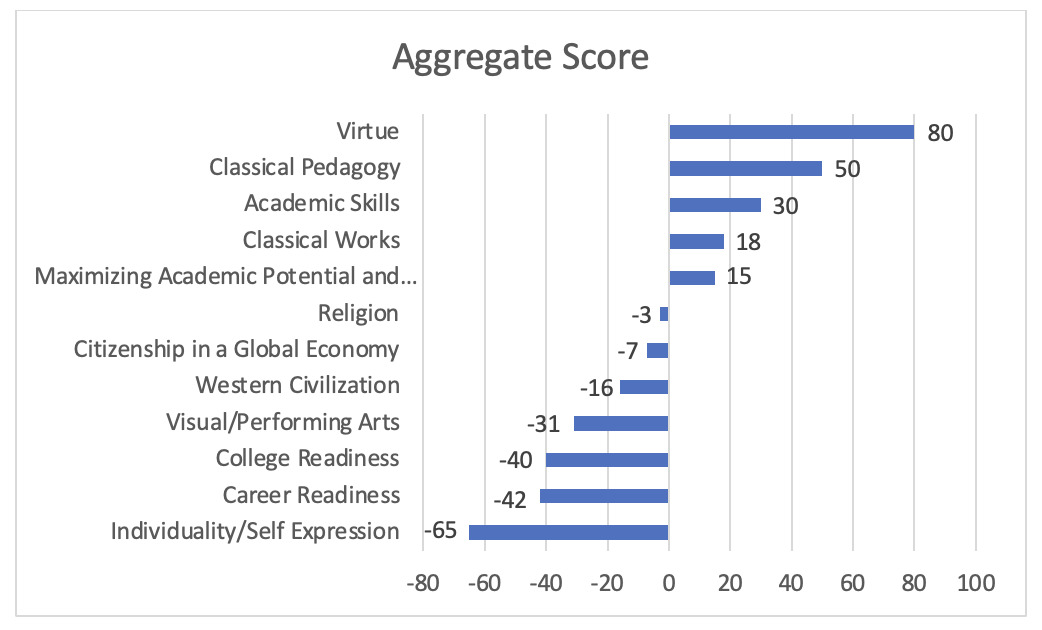
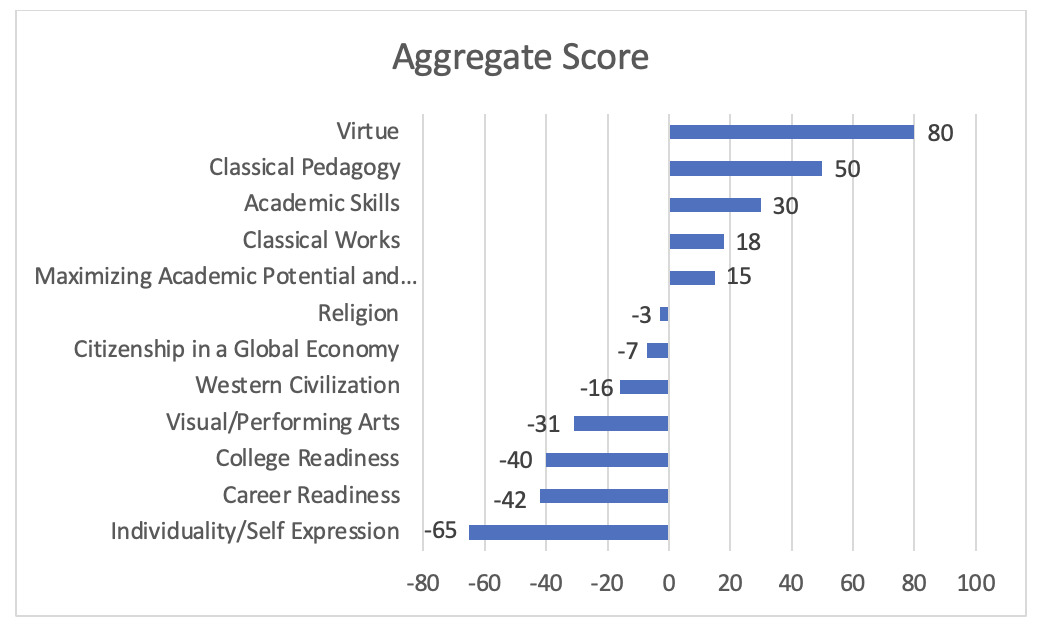
Virtue (undefined) and exposure to classical pedagogy were among the most popular choices as academic outcomes of a classical education. However, basic academic skills and maximizing academic potential and achievement (more modern concepts) were also positively rated. Individuality/self-expression was easily the least popular option, followed by college readiness, career readiness, and visual and performing arts. Respondents gave negative ratings to appreciation of Western Civilization, and an ambivalent/slightly negative rating to Religion. Those results suggest that both religion and an appreciation for Western civilization were typically not preferred when compared to other options in this survey.
Life Outcomes
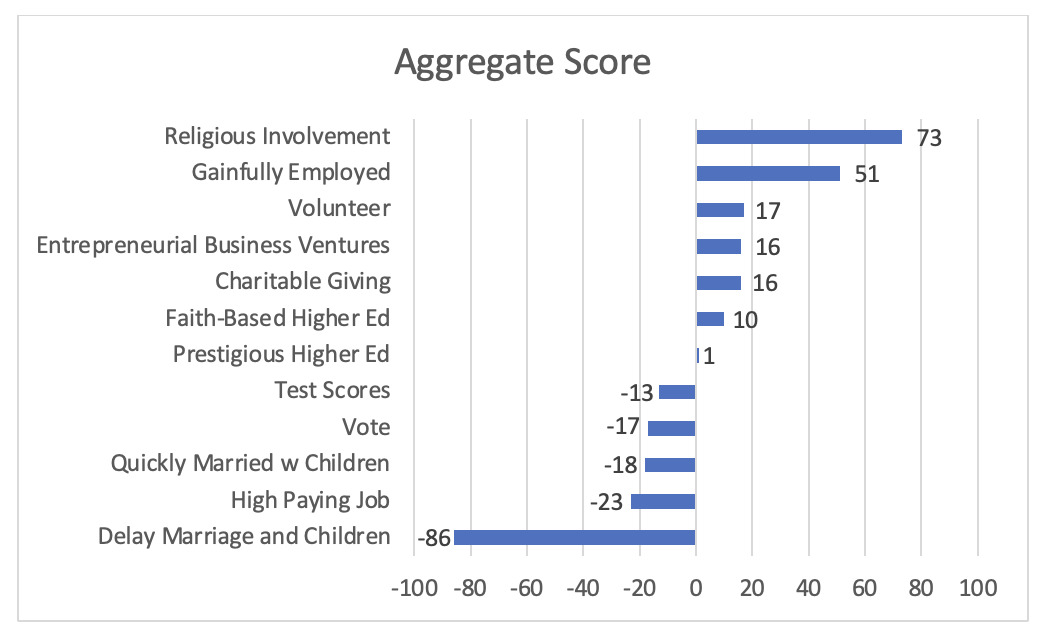
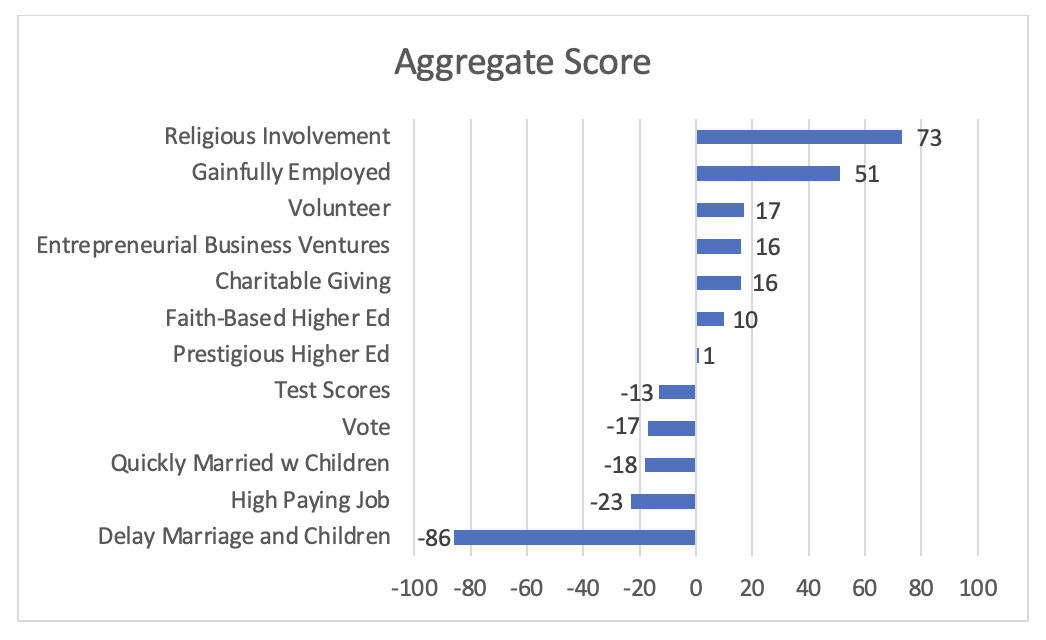
Religious involvement and gainful employment were easily the most-preferred Life Outcome options. Delaying marriage and children was by far the least-preferred outcome (although quickly marrying and having children was also negatively rated on aggregate). Attending a faith-based institution of higher education was more popular than attending a prestigious institution. Volunteering was seen as more important than Voting. And seeing their students become Gainfully Employed or Entrepreneurial was more important to respondents than having a High-Paying job.
Discussion and Implications
The hypothesis that parents and administrators would generally prefer options focused on tradition and virtue over others proved not quite correct. Undefined “virtue” was popular, as was involvement in a religious organization. Virtue-focused definitions of classical education were the three most popular choices as well. But academic skills and achievement were more popular than several virtue-based concepts, and some of the more modern-sounding definitions resonated with respondents more than some of the traditional-sounding options.
One of the most interesting results for classical school supporters, because of the fact that most classical schools (and certainly most of the classical schools in this survey) are religious in nature, might be the fact that virtue and religion seem almost totally disconnected in these results. Though most of the definitions do not mention these terms together, in practice many classical schools do maintain that they are related. While undefined “virtue” received the highest positive aggregate score in the entire survey (+80), “religion” was rated ambivalently by respondents (-3). The fact that both religion and also an appreciation for Western Civilization (-16) received such ratings is an interesting outcome as the respondents are all from classical schools, and nearly all of them are also at religious schools, which seem likely to focus on both of these issues. Complicating matters more, respondents do seem to want their students involved in a religious community after graduation (this preference received the second-highest positive aggregate score), but again, when offered the preference of religion itself, respondents did not give it a high priority.
In terms of academic outcomes, classical parents and administrators seem to reject the “college and career readiness” mantra of modern education, as both options had negative aggregate scores. However, formal academic outcomes like skills and maximizing academic achievement both received positive ratings. Postsecondary education options received positive scores, though attendance at faith-based institutions of higher education (+10) received higher ratings than “prestigious” higher education (+1).
Regarding general life outcomes, marriage and children also seem to receive less priority than one might expect from a set of classical Christian schools. Delaying marriage and children received the lowest negative aggregate score across the survey questions (-86). But quickly marrying and having children was also not preferred (-18) compared to other possible outcomes. It is possible these respondents would like to see their graduates having families of their own; just not “too soon.” Voting (-13) and Volunteering (+16)—other common civic outcomes—were near mirror images of each other, with respondents preferring their graduates volunteer in their communities than vote.
Conclusion and Avenues for Further Research
Two issues stand out as logical avenues for future study. First, one might expect “religion” and “virtue” to be tightly tied among a set of parents and administrators at schools focused on both, but, in this survey, that was not the case. At least, it was not the case when people were asked to choose between undefined concepts of “religion” and “virtue.” If “religion” and “virtue” are extremely different in these respondents’ minds, what might that mean in terms of school culture, and curricular/classroom emphases? Ellis (2023, 39) especially argues that defining “virtue” is a necessary step for the classical education movement to take. Exploring what exactly classical school leaders and parents mean when they use these words would be a fruitful path for further research based on these results.
Second, classical families and leaders seem to shun “college and career readiness” and test scores, and are ambivalent about “prestigious” higher education, as one might expect based on the reputation of the classical education movement. But these families and leaders also show interest in academic skills and potential, and are not necessarily turned off by definitions of classical education that include more modern phrases/concepts like “lifelong learning” or examining information critically. A larger dataset of responses than the one available for this study would also be useful in learning whether differences in these preferences exist between teachers and administrators, between secular/charter and religious/private classical schools, or between schools and families based on other such differences.
One way to do this might be to look to international classical schools, though this may be difficult. While the version of classical education discussed at the outset of this paper has some purchase over some other Anglosphere nations, it is not nearly as widespread elsewhere. Families and schools may use American classical publishers, but the movement does not have the same institutional structure of schools, teachers, etc., that are now found in the U.S. To the extent there are similar classical schools and homeschoolers in these other nations, it is possible that American cultural influence is at work. Whatever the reasons, this suggests an additional avenue for further study. Because it has a significant market share in the U.S. and because its growth seems to continue, in both its private/religious, and public/secular manifestations, understanding the classical education renewal is important to understanding the overall education reform space in the wake of COVID-19. What schools and families mean by “classical education” and its components, what their long-term goals are for classical schools, and where these schools are growing, or might grow, are all worthy avenues of empirical study.